


Both: Hey, everyone!
Jen: It’s Jen and Greg with an update on our travels.
Greg: This update, we’re finally beginning to talk about our time in Italy.
Jen: Yay!
Greg: Specifically, we’re going to talk about Milan.
Jen: Yeah, and Milan is almost a city we did not stop in. Because in our brain, it’s nothing but high fashion and design, and that is totally not our thing.
Greg: No, but we needed to break up the train travel, because Spiez to Venice was going to be a lot longer of a single day travel than we wanted to do. And Milan was a natural point to kind of break up that travel. So we started looking for things to do and we saw Milan is the home of The Last Supper. And I looked at Jennifer, like, how did we not know that da Vinci’s Last Supper is in Milan?
Jen: That pretty much sealed the deal on us making Milan a stop on our trip.
Greg: Yeah, but we found so much to do and so much is worth telling you about that we’re going to have to break this up or it would be an update that takes over two hours.
Jen: Yeah, there’s a lot of stuff to talk about.
Greg: Yeah. So we’ll start with our arrival at Milano Centrale Station.
Jen: Milano Centrale is one of the busiest train stations in Europe, and it was designed in 1912, actually built in 1931 and it’s inspired by ancient Roman and Egyptian architecture.
Greg: Yeah, it has sculptures of winged horses, lions, bulls and eagles. It’s got big vaulted ceilings, Art Deco and some Italian Art Nouveau. There’s just so much you want to look at, but we realized that that was probably a bad idea.
Jen: So yeah, when we got off the train with our backpacks on, we were clearly tourists. So we tried to admire as much as we could, but really kind of kept our heads down to, to get to our ride-share location.
Greg: Yes, because we were headed to what they call “the living room of Milan.”
Jen: (laughing)
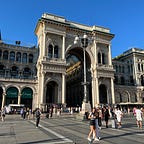
Greg: It’s the Galleria Vittorio Emanuele II.
Jen: The Galleria is an open-air mall that was originally created as a means of connecting the Piazza del Duomo to the Piazza della Scala. And it’s more of like a castle than what you would think of as a traditional mall. It has this big arched entrance. There’s mosaics on the floor, frescoes on the wall. The ceiling is just this domed ceiling of iron and glass. So the natural light in there is pretty cool.


Greg: Yeah. And when you see it from the outside, it’s like a palace or an opera house and not a mall. So that was a really cool thing to actually stay in because our hotel is in the Galleria. The hotel we stayed at is Galleria Vik Milano.
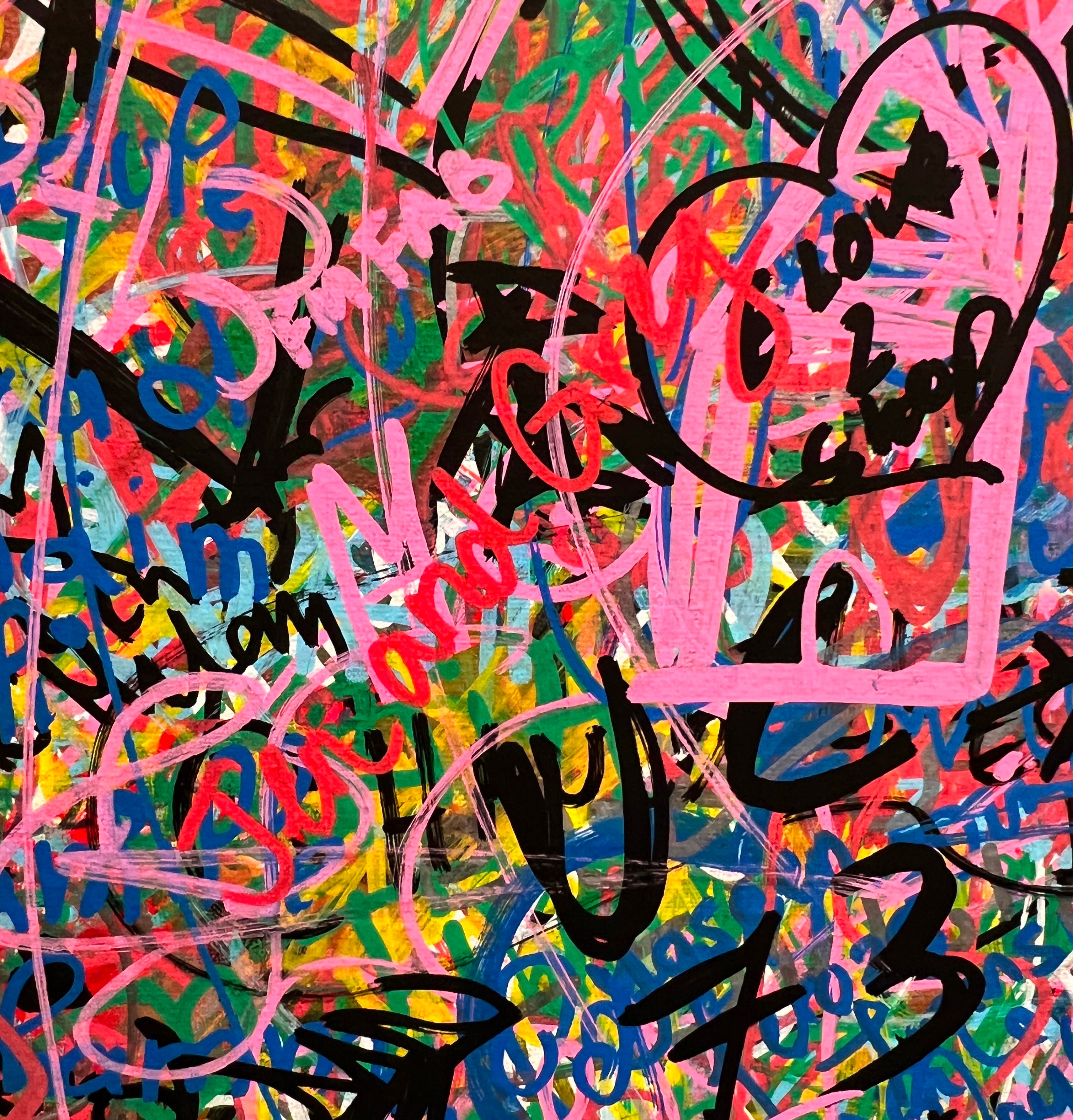
Jen: And what we didn’t realize when we booked it was each room is dedicated to an artist. And some of them actually have more than one room dedicated to them because they’ve had several different styles in their career.
Greg: Right. Our room was based on the work of Claudio Monnini, who was a Milan born and raised artist and architect who has had the privilege of his work being shown at an event called Venice Biennale, which is supposed to be like the Olympics of the international art world.
Jen: And just a quick warning about Claudio — some of his art does include nudity. So if you look him up, just be forewarned. So when you walk in the room, his art is all over the walls. There’s different canvases, really cool paintings. But one of the best things about the room, in my opinion, was the bathroom. Because the whole thing is just a hand-painted mural. When the hotel told him that they were going to dedicate a room to him and his art, he actually came to the hotel to paint it himself. So it’s not like one of those decals they put on the wall. It’s not wallpaper. It’s really hand-painted art.
Greg: Yeah, which I found odd because what if somebody decided to damage it?
Jen: I don’t know...
Greg: Nobody had. It’s really impressive, but it was still something in my mind. Um, besides the artwork, something that was noticeable about the room is you see these steps, like three, four very large steps up to a very tall, big window. So I walked up and it turns out they are French doors that open to a private balcony that overlooks the Galleria.
Jen: Yeah, so that was a pleasant surprise! We didn’t realize we were going to have that kind of view. And we went out there quite a few times.
Greg: It was a great room. And once we got settled in, we took some time to go down and walk around the Galleria. We were extremely close to Duomo di Milano and we couldn’t not go look at it. So we headed to Piazza del Duomo.
Jen: Right. So Il Duomo is the huge cathedral in Milan. It’s iconic for the city, maybe even for the whole country of Italy. And if you watched any of the Winter Olympics, it was in several shots as they went to commercial.
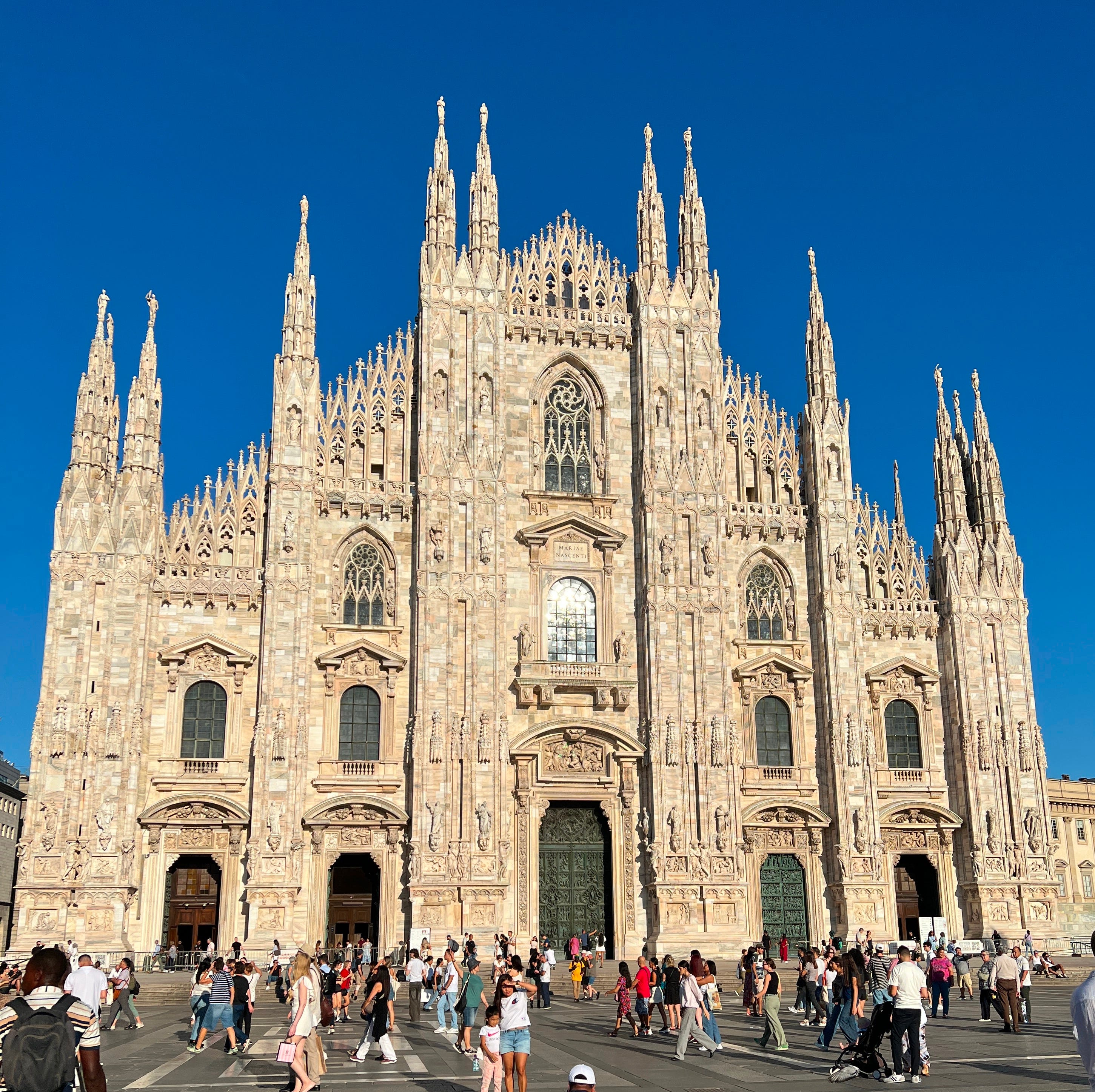
Greg: Yeah. And from the outside, it’s heavily decorated, a lot of marble, a lot of statues, large and small. We got some pictures of that.
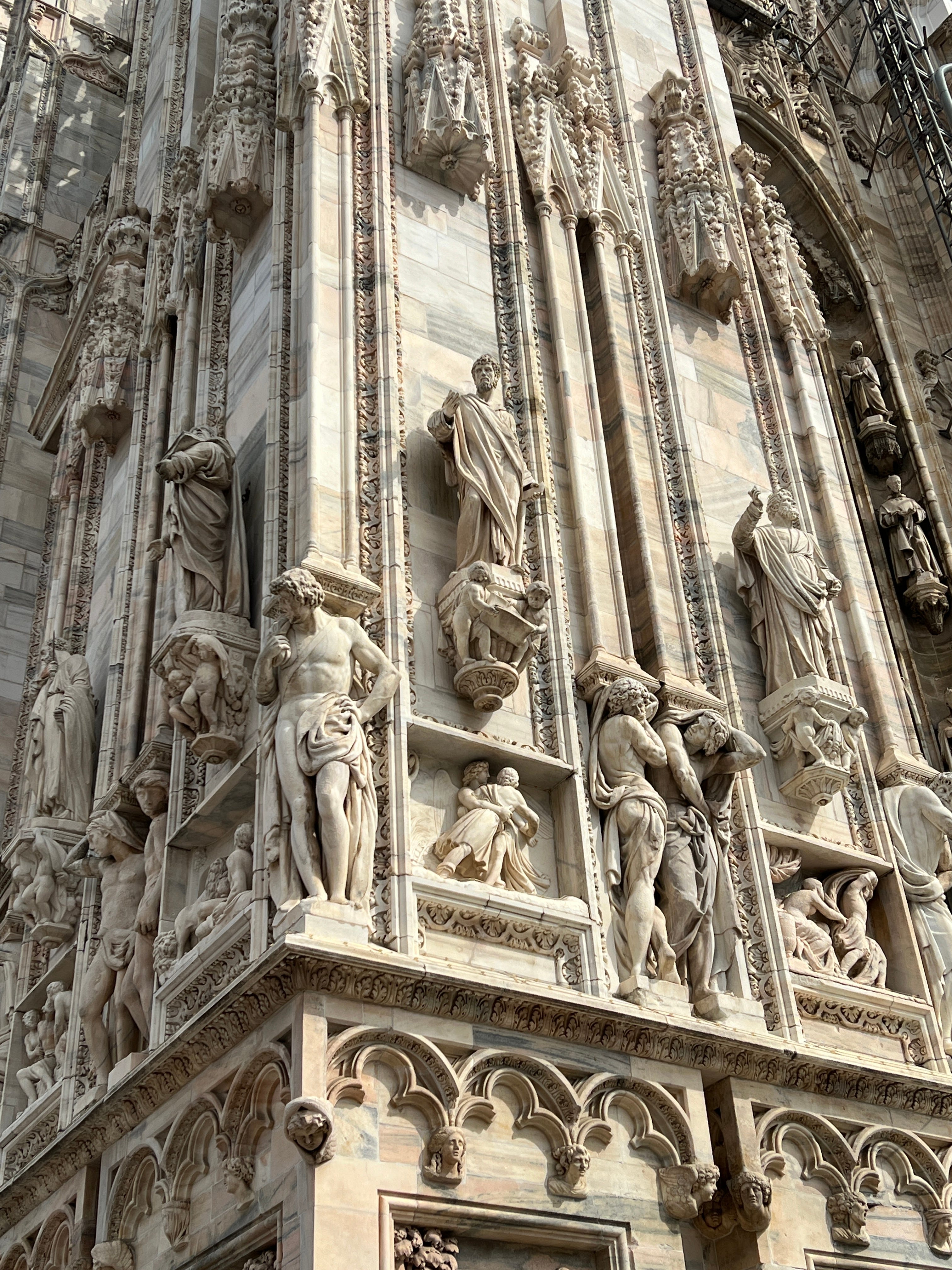
Jen: Yep. But we didn’t go inside just yet because you had to have tickets and we knew we were going to do that the next day.
Greg: That’s right. The next day would be our first full day in Milan, and the main thing on the itinerary was a guided walking tour.
Jen: Yeah, and that was gonna to include the castle in Milan, walking through the famous Brera neighborhood, The Last Supper, the Galleria, and going inside Il Duomo.
Greg: So the main reason we booked this walking tour is because even though we were booking six to eight weeks out, we looked for tickets to The Last Supper, and it is sold out months in advance. The only way we were going to get to see it was trying to find a guided walking tour that allowed you to go in with them to see it. And we found one.
Jen: And I feel really lucky that we found this one because our tour guide Corrado was really amazing. He was just really calm and had a really soothing way of speaking. And the way he was always trying to teach, wanting people to learn things, just made you really engaged in the tour. And he was always clear with his directions. He was a man with a plan, and I appreciate that to no end!
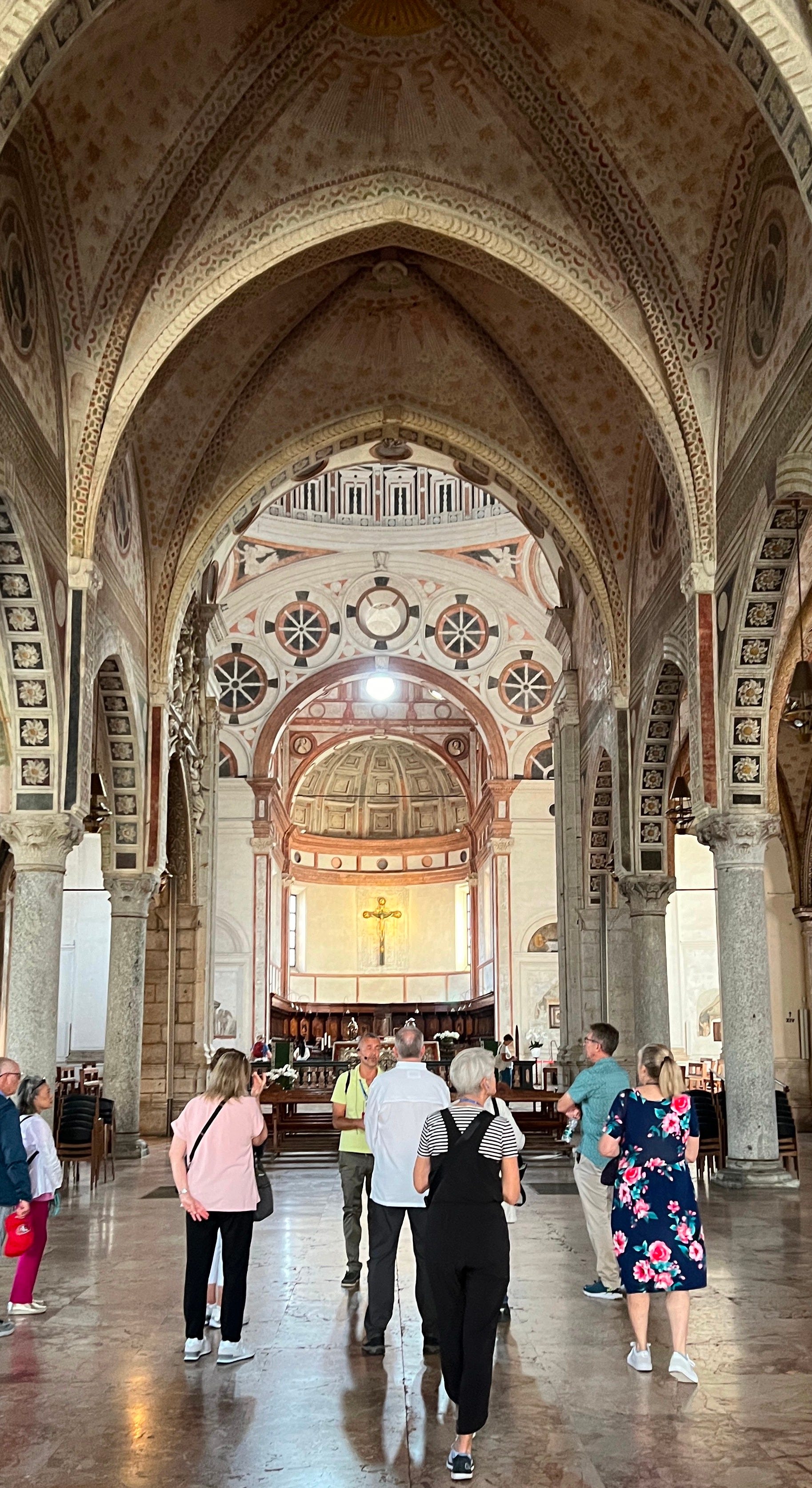
Greg: He maintained, like, a narrative control over the tour group and admittedly also sometimes a physical control of the tour group. But the result is that you never felt like the tour was drifting or listless.
Jen: Right. Just so we’re all on the same page, the painting we’re talking about is the famous fresco by Leonardo da Vinci of the Last Supper, which depicts Jesus’s final meal with the apostles before his crucifixion.
Greg: It is one of the greatest masterpieces of Renaissance art, some might say, the greatest masterpiece of Renaissance art.
Jen: Yeah, I’m not really quite sure what qualifies something as a great masterpiece, because the extent of my knowledge of Renaissance art stops at the Ninja Turtles.
Greg: (laughing) So, okay, this is actually relevant, though. Okay? So... who is your favorite Ninja Turtle?
Jen: Raphael, because he’s cool…but rude.
Greg: (laughing) Right. So, interestingly enough, my favorite piece of Renaissance art is called School of Athens, which was done by Raphael. Give me another Ninja Turtle.
Jen: Leonardo.
Greg: Right. Leonardo da Vinci has one of the greatest masterpieces, The Last Supper. Who is another Ninja Turtle?
Jen: Michelangelo.
Greg: That’s right. The party dude.
Jen: (laughing in background)
Greg: Michelangelo has two masterpieces that some consider may be the greatest masterpiece of renaissance art one being the Sistine Chapel —
Jen: Yeah.
Greg: — The other being his marble statue of David.
Jen: I think that’s probably my favorite.
Greg: Yeah it’s a pretty great piece which also would not exist if it were not for Donatello doing a bronze version of it before any of the other three were even born.
Jen: But he’s not your favorite Ninja Turtle…
Greg: No, that’s Leonardo because he had two katanas and he was the leader. (laughing)
Jen: (laughing)
Greg: But the point remains, those four Ninja Turtles are named that way because of the outsized impact each one of them had in Renaissance art.
Jen: Okay, but back to The Last Supper. So it’s painted on the wall of a former dining hall, which is apparently a common practice in 1400s Italy to kind of give the monks a feeling of dining with Jesus and his disciples.
Greg: Right. It’s not in a museum. It’s in a Dominican church and monastery called Santa Maria delle Grazie.
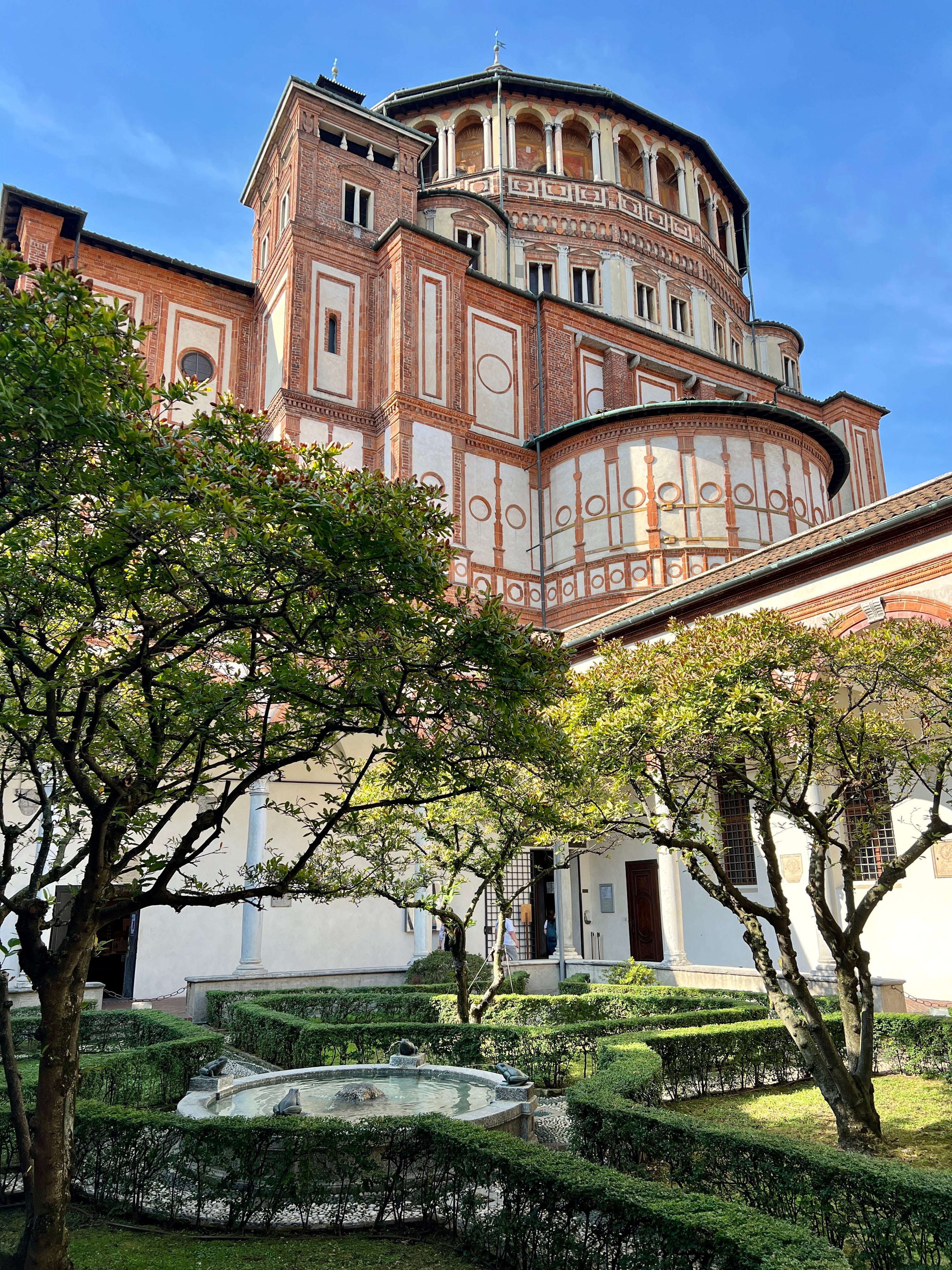
Jen: Yeah, so we had to provide a copy of our passports when we booked the tour because our tickets had our names printed on them so they could verify our identities when we got there. And everything you brought with you other than your camera, basically you put in a locker. So water bottles, bags, jackets…
Greg: Yeah, and you don’t go straight in to the former dining hall. You go through a couple of smaller rooms first.
Jen: So on the walls, there’s so many black and white photos of the locals who, without even being asked, wanted to protect this painting. And they put up scaffolds and they pile sandbags and just did everything they could to keep this wall standing.
Greg: It’s an English-speaking tour. So they didn’t really want to go into who bombed Italy at that point — because it was the Allies — and everybody there was from the U.S. or the U.K. or Canada. And on top of that, they probably also didn’t want to talk about why Italy was…on the side of Nazi Germany.
Jen: Yeah. So when it was our turn to go into the dining hall, we went through these doors and the room was a lot bigger than you expected. But your eyes are immediately drawn to the painting itself.
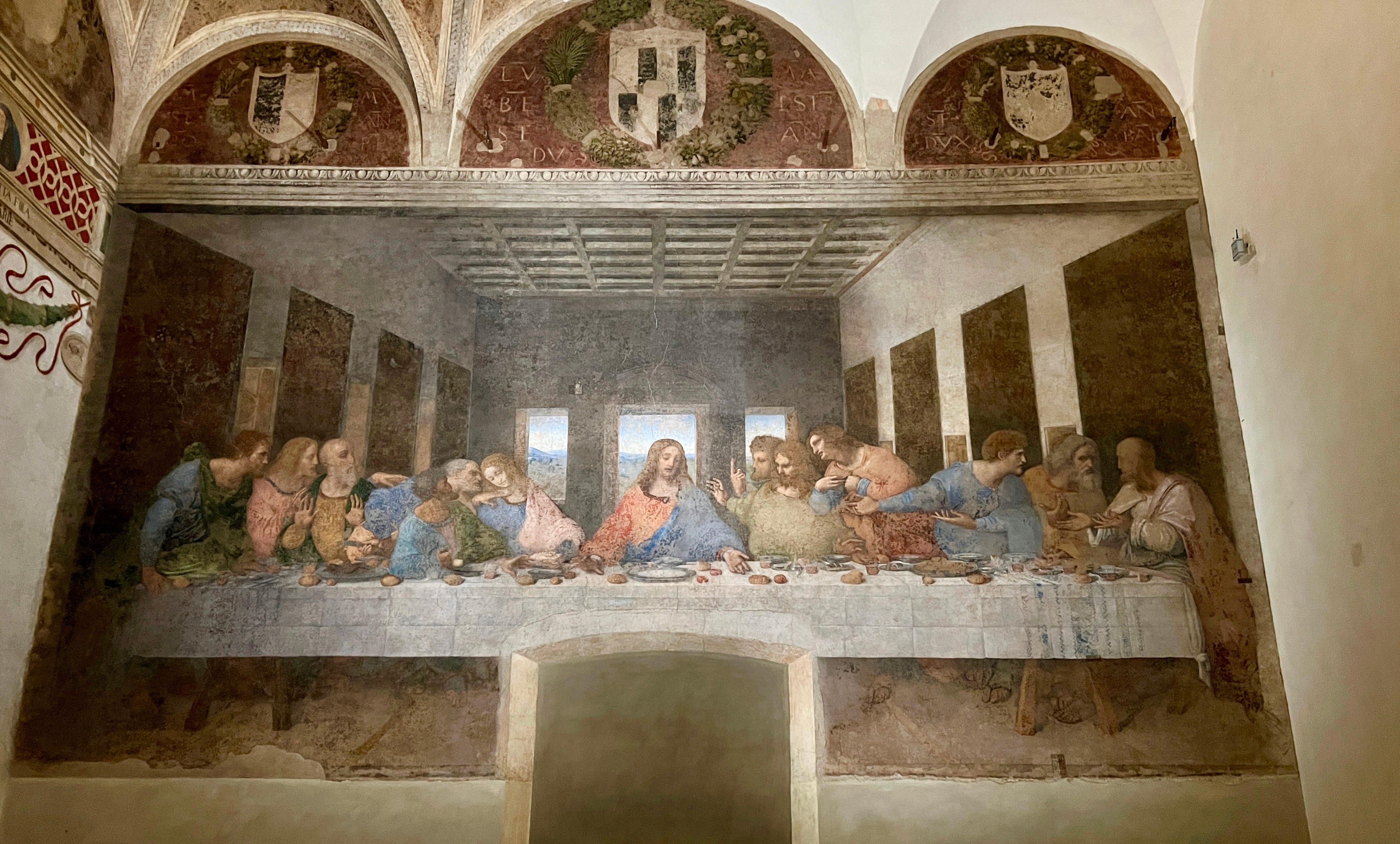
Greg: Yeah, I mean, I think they kind of do that with the lighting a little bit. But the first thing I noticed is that The Last Supper was very faded and kinda damaged.
Jen: Yeah, but even though it’s faded, you can’t help but look at it with a feeling of reverence. Like, I don’t want to say it was a religious experience or anything like that, but there was definitely a lot of emotions that I felt standing there looking at this amazing piece of art.
Greg: Yeah, I think some of that reverence comes from, as we said, it’s potentially the greatest masterpiece of Renaissance art. There’s also the content is religious in nature, which adds to that reverence. For me, seeing masterpieces, seeing these things you only learn about at school or that you see on TV, and I’m standing in front of it, I have my wife with me. It’s why we started the travel.
Jen: Yeah. So even now, months and months later, it’s hard to talk about this and even look at pictures without feeling those same feelings you felt when you were standing in that room.
Greg: Yeah. It’s also, like, people fight so hard to keep it here because it really is a marvel that it still is in existence.
Jen: Right. After so many, like, botched restoration attempts and the building flooded and the bombings, of course, and Napoleon’s troops were even said to have used it as a, like, backing wall for target practice.
Greg: Yeah, and besides that, it is very faded, like I said, because apparently da Vinci wanted more control over the details and the color of what he was painting, so he opted not to use the traditional method for painting a fresco. And he used a more experimental method. The downside is, even within his own lifetime, it was starting to fade and crack. The difference between the two methods is noticed immediately when Corrado says, “Now everybody follow me over here to the other side of the room,” where there is a fresco on the other wall you didn’t even really notice at first.
Jen: Right. This one was done in 1495 and it’s called The Crucifixion by Giovanni Donato da Montorfano. And it’s still in great shape. The colors are still very vibrant. The plaster is still all intact because it didn’t really take much damage in the bombings during World War II, and the locals didn’t have to protect it like they did on the da Vinci wall.
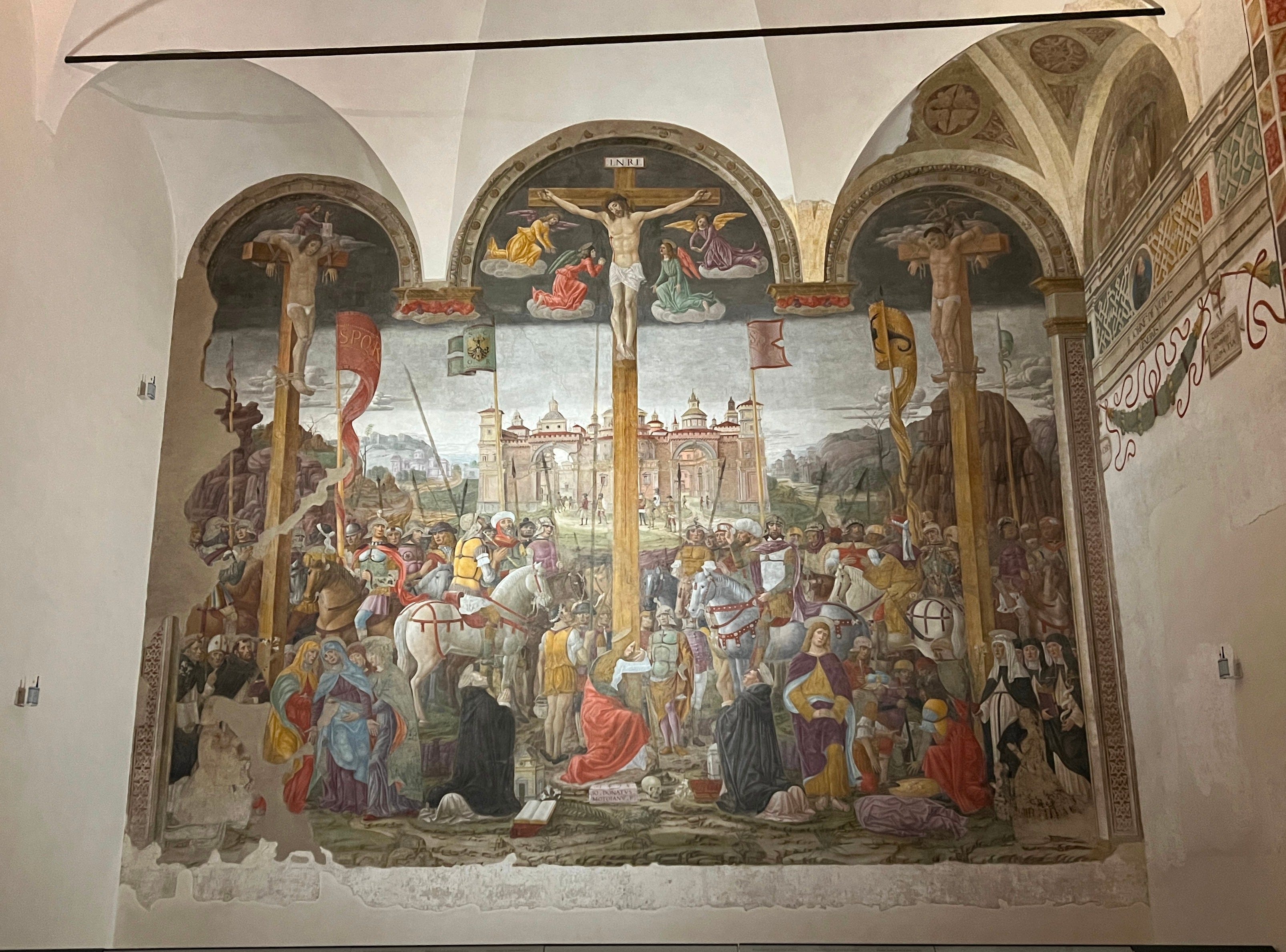
Greg: But again, highlighting the difference between the techniques, they asked da Vinci, because he painted later, after Montorfano. They asked him to paint the portraits of some of the Sforza family members on that wall. So just below, you can barely see, it’s very faint, almost invisible, these portraits that da Vinci chose to use the experimental method instead of the traditional method. If the restoration and preservation efforts were not being done for The Last Supper, it would look like those portraits. Almost completely gone.
Jen: We learned that really only about 20% or less of da Vinci’s original work on The Last Supper is what remains on that wall.
Greg: Yeah. Now, if you want to see what The Last Supper looked like closer to da Vinci’s time, you can. Because after he finished that — about 20 years later — one of his students painted it on oil and canvas. It’s in London somewhere in a museum, but Google scanned a copy of that oil and canvas version, like over a billion pixels. It’s got all kind of details. So you can go online and find that and you can see things that are just not visible in the actual Last Supper now, like a, uh, spilled salt shaker, facial expressions. Also, the colors are just way better in the oil and canvas version.
Jen: Yeah. So we only got about 15 minutes in the room. And so as they begin to kind of shuffle you out so the next people can come in, you notice by the doorway, there’s this 3D plaster casting of The Last Supper. So people who are blind or visually impaired can have that same kind of experience that we had, being able to see it.
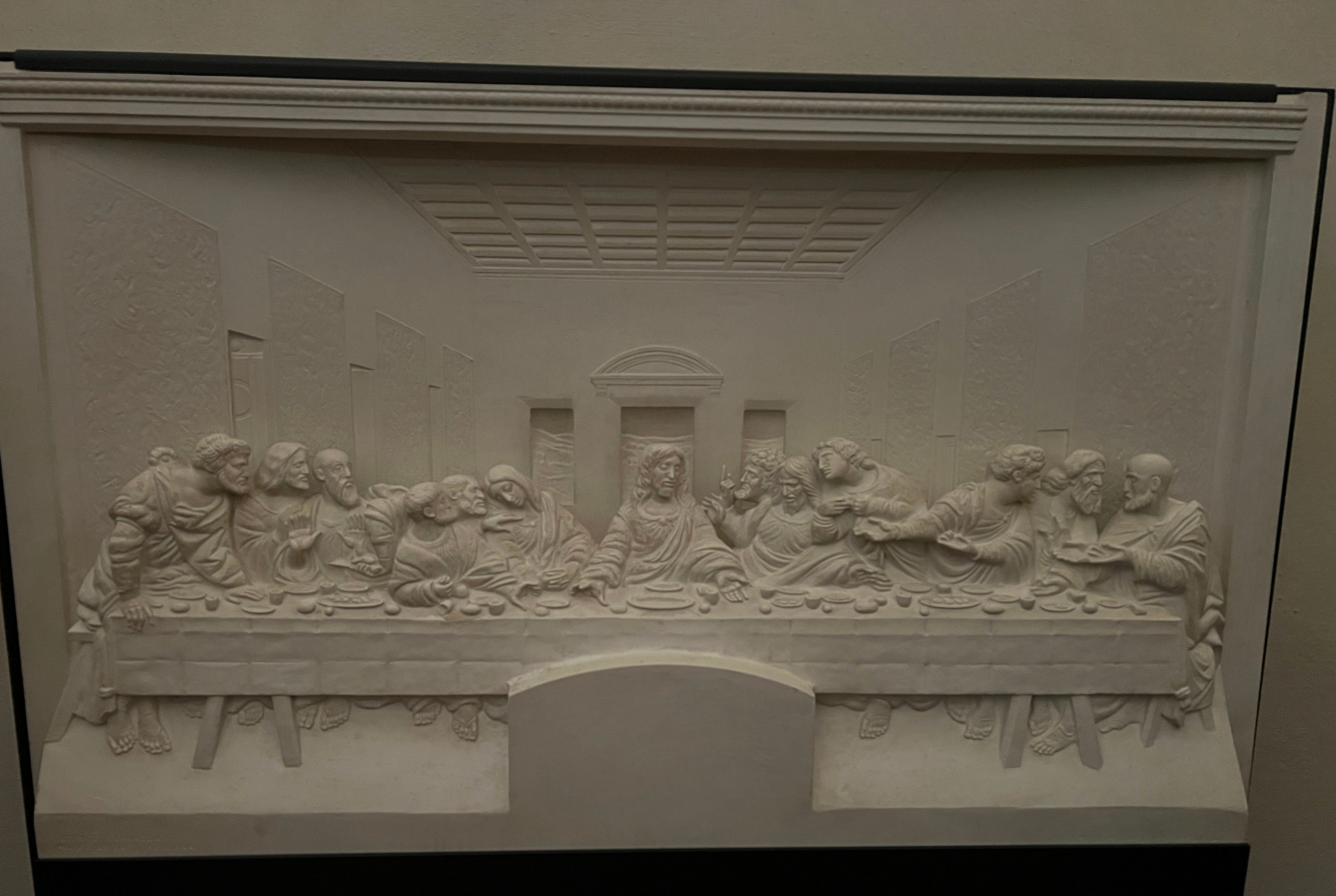
Greg: Yeah, that was a really cool aspect, I think. So once you are out of the room, you know, they give you a moment, go to the restroom, and that kind of stuff, and then you recongregate. Corrado toured us through the rest of the church. But then, uh, he took a moment to explain to us very detailed, step by step, of what else was going to come on that tour.
Jen: So the rest of the tour was going to be the castle in Milan, walk through the Brera District, learn more about the Galleria, and we were going to get to see the inside of Il Duomo.
Greg: Right. But that’ll be in the next update. So…thanks for checking in.
Jen: And we’ll see you at the next stop!


