
Both: Hey everyone!
Jen: It’s Jen and Greg with an update on our travels.
Greg: It’s been a while since our last update. If you’ve forgotten, we are in Zurich. This is about the second full day, a Saturday. That was a lovely, beautiful day. We were going to walk all around downtown.
Jen: Yep! But before we get into all the fun stuff, just wanted to give you guys a quick update about Greg’s health. What began as a bit of a health scare turned into way more of a prolonged recovery period than either one of us were expecting.
Greg: Yeah, and technically I’m still recovering, but I’m doing much better. And we kind of really wanted to get back at this because we like sharing these updates of the time that we spent traveling Europe, and we just wanted to get back to doing it.
Jen: Yeah, and we just wanted to also say thank you for your patience and all your kind words that were sent after our written update.
Greg: Yeah, I was really kind of touched and moved, and I, I don’t know, maybe it was just I was on so much medication, but —
Jen: (laughs)
Greg: — so many people did reach out, like, just kind of said, “hey, we’re thinking about you. We’re praying for you.” Ah, it was really great, and thank you to everybody.
Jen: Yeah.
So like Greg said, it was a gorgeous Saturday morning, and we just decided to grab an Uber and take a ride into the city center of Zurich.
Greg: Yeah, we started off at a place called Paradeplatz, which means Parade Square, and was historically the place that they would do military parades.
Jen: Yeah, but now it’s a major hub for trams and buses, and it’s one of the most valuable pieces of real estate in Switzerland.
Greg: All around Paradeplatz are a lot of the financial pieces that Switzerland, and specifically Zurich, has become known for. It’s one of the most important financial centers in Europe. It’s home to about 260 banks and manages roughly a quarter of all wealth that is managed abroad. Meaning people who want all their money to not be in the same nation where they live.
Jen: It’s also one of the world’s largest centers for private gold storage and trading.
So hundreds of other financial institutions operate in and around Paradeplatz as well. It’s kind of like a “who’s who”of global banking within just a few city blocks.
Greg: The cooler piece —
Jen: (laughing) For us, anyway.
Greg: Yes.
Is a chocolate company called Sprüngli, I think is how you pronounce it.
Jen: Yeah. So Sprüngli was founded in 1836 and they opened their Paradeplatz location in 1859. And it is actually one of the most famous chocolate shops in the world. Fun fact to kind of tie back to our Lindt chocolate factory — they were actually once the same company.
Greg: Yeah. Well, we went into the Sprüngli outlet, and it was really just a typical chocolate shop, like retail location. There was a long line, people buying lots of chocolate. But we had just done that factory tour, so we were a little bit chocolate-d out. We just went ahead and continued walking down what is known as Bahnhofstrasse.
Jen: So Bahnhofstrasse is one of the most famous and most expensive shopping streets in the world, comparable to Fifth Avenue or Champs-Élysées.
Greg: Yeah. It has a lot of luxury brands, but especially luxury watch boutiques, because Switzerland is actually the most dominant producer of luxury watches in the world…as measured by value for those people out there who might be sticklers. But the luxury watch industry itself generates about 25 billion Swiss francs a year in exports.
Jen: The place we were really headed to was the Beyer Watch & Jewellery Store. It’s an eighth generation of family collectors who run this store. The family business opened in 1760, and it’s one of the oldest watch retailers in the world. But what we were really wanting to see was the private museum that’s in the basement, and it includes timepieces dating back thousands of years.
Greg: Yeah, so when we got there, we really weren’t sure if it was the right place because it just looks like a normal watch store. There was a very nice guard out front who spoke English, and I asked if this was the correct place. He told us, “yes, this is the correct place.” He told us about some of the cool things that they had in the museum, like watch pieces from hundreds of years of the evolution, as it were, of timepieces, including some, like, sundials that were from ancient Egypt.
Jen: And I was really excited about this because I love watches! But…it’s closed on Saturdays.
Greg: So no admittance…
And we just continued up Bahnhofstrasse. We went to the Victorinox flagship store. If you are not familiar, Victorinox is the company that makes the famous Swiss Army knives.
Jen: Yeah, but they also make luggage and kitchen knives.
Greg: Yeah, a lot of stuff in there, but the shop was kind of small.
Jen: Yeah, I was really surprised at the size for a “flagship” store.
Greg: Yeah. But when you go, they have demos and show you how they make the knives. And of course, if anyone is purchasing a knife, you can see them assembling it in the store.
Jen: Yeah, ‘cause you can custom make your own knife so you can pick which little gadgets you want to carry around in your pocket.
Greg: Yeah. Unfortunately, they were not doing demos that day.
Jen: This is gonna prove to be a theme for this outing.
Greg: Yeah.
Jen: (laughs)
Greg: Anyway...
The next place that we headed towards is called Brunngasse Acht.
Jen: Brunngasse 8 is a building, and it’s the best preserved and most significant medieval Jewish family dwelling in Europe. And it sits in the heart of what, during the Middle Ages, was Zurich’s Jewish community.
Greg: And for those who like to hear me attempt German, that neighborhood is called Judengasse.
Jen: (laughs) For our German speakers, I hope everybody can forgive him!
Greg: Yeah...
Jen: But the building itself dates to about the 12th century, and approximately 1330, a Jewish family commissioned some wall paintings on the inside that are supposed to be really remarkable.
Greg: Yeah, and unfortunately, like most Jewish populations around Europe, in Zurich in 1349-ish when the Black Plague was occurring, many people blamed Jewish populations and communities for starting or spreading the plague, and they expelled the Jewish populations, and the buildings that they owned ended up either destroyed or passed on to other people or sold.
Jen: So when the new family took over the home, they covered these paintings and they were essentially forgotten for over 600 years. Until about 1996, when renovations were being done to the building and workers came across them purely by accident.
Greg: Yeah! And from that point, they were uncovered. They were studied. They tried to restore them to some effect, and a museum was created that opened in 2020. And like so many museums around Europe, the entry was free.
Jen: Yeah. It was also closed on Saturday.
Greg: Yeah. We, at this point, had come to understand that we probably should have paid a bit more attention to opening times and days.
Jen: And what day of the week it actually was! (laughs)
Greg: Yeah.
Well, around the corner from Brunngasse is a significant establishment. It’s specific to an art movement called Dada. It was a location called the Cabaret Voltaire.
Jen: Yeah. So just to give you a little bit of background, because I had to look it up. I wasn’t familiar. Dada is an art movement that emerged in Zurich around 1916 and it was founded by a group of artists and intellectuals who actually fled World War I. The art that they created was deliberately absurd, and it was a protest to the war. It also influenced modern conceptual art and surrealism.
Greg: So we didn’t go into Cabaret Voltaire, but we did learn this really neat coincidence is that Vladimir Lenin — yes, the Russian revolutionary —
Jen: (laughs softly)
Greg: — lived on the same street at exactly the same time that Dada was emerging. And also, James Joyce lived in Zurich at the same time.
Jen: Yeah, and James Joyce is an Irish poet and author if you’re —
Greg: Right.
Jen: — not familiar. Kind of —
Greg: Um…
Jen: — one of history’s greatest coincidences.
Greg: Uh, yeah. It’s just strange and almost —
Jen: Yeah.
Greg: — as surreal as the art when you learn this little tidbit.
Jen: Crazy.
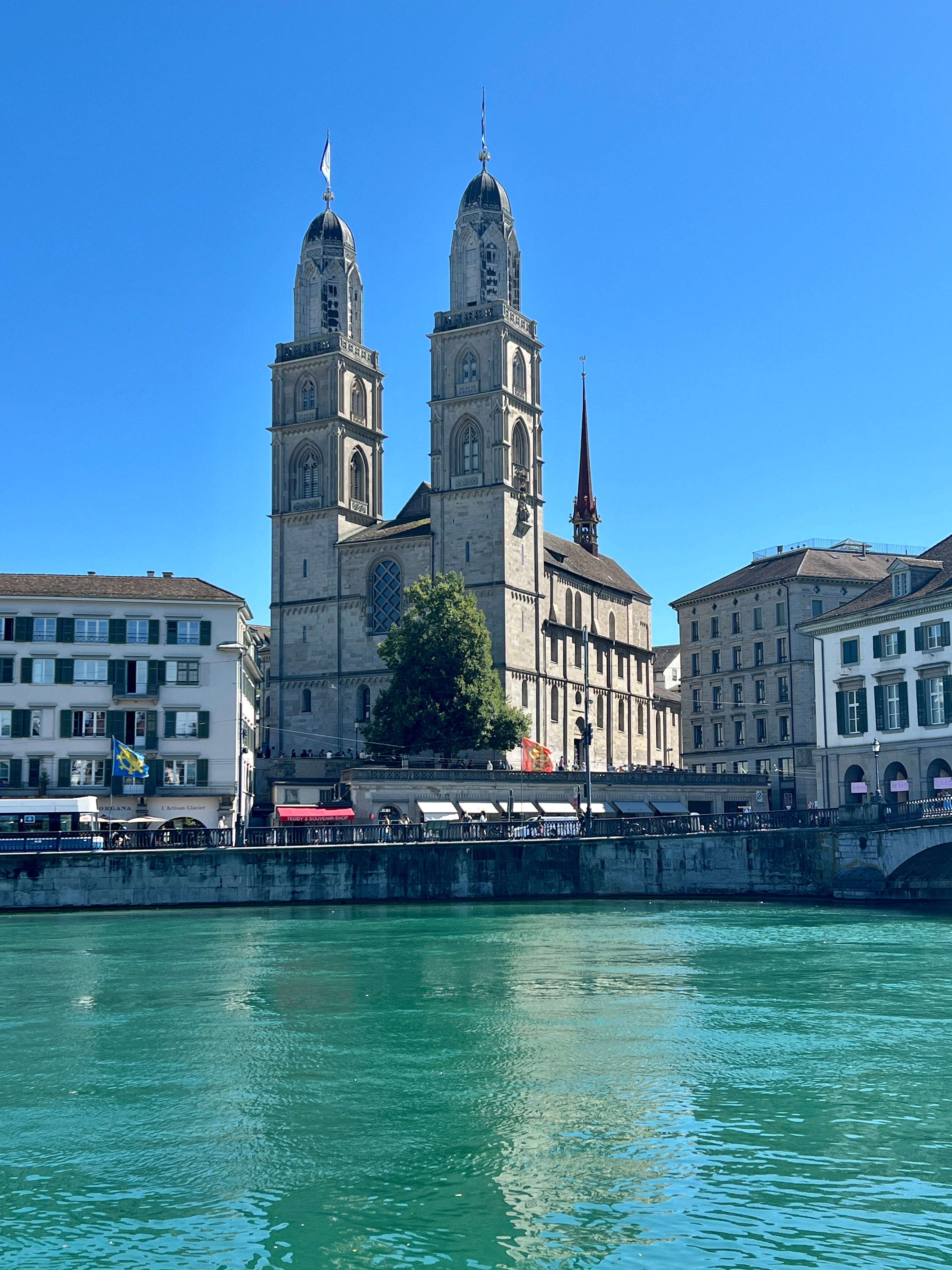
Greg: Yeah. In any case, Dada’s not really our thing, so we just preferred to continue walking along and seeing some of the cool architectural buildings in history around Zurich, like the Grossmünster, I think it’s called, which is a church with iconic Romanesque towers.
Jen: Yeah. So we decided to keep walking and we went to Lindenhof.
Greg: So something about the site itself, Lindenhof is one of the oldest parts of Zurich, where there used to be, in Roman time, a customs post and a fort. And then later in medieval time, an imperial palace. So the square is kind of like on top of all that history and we thought this should be really cool.
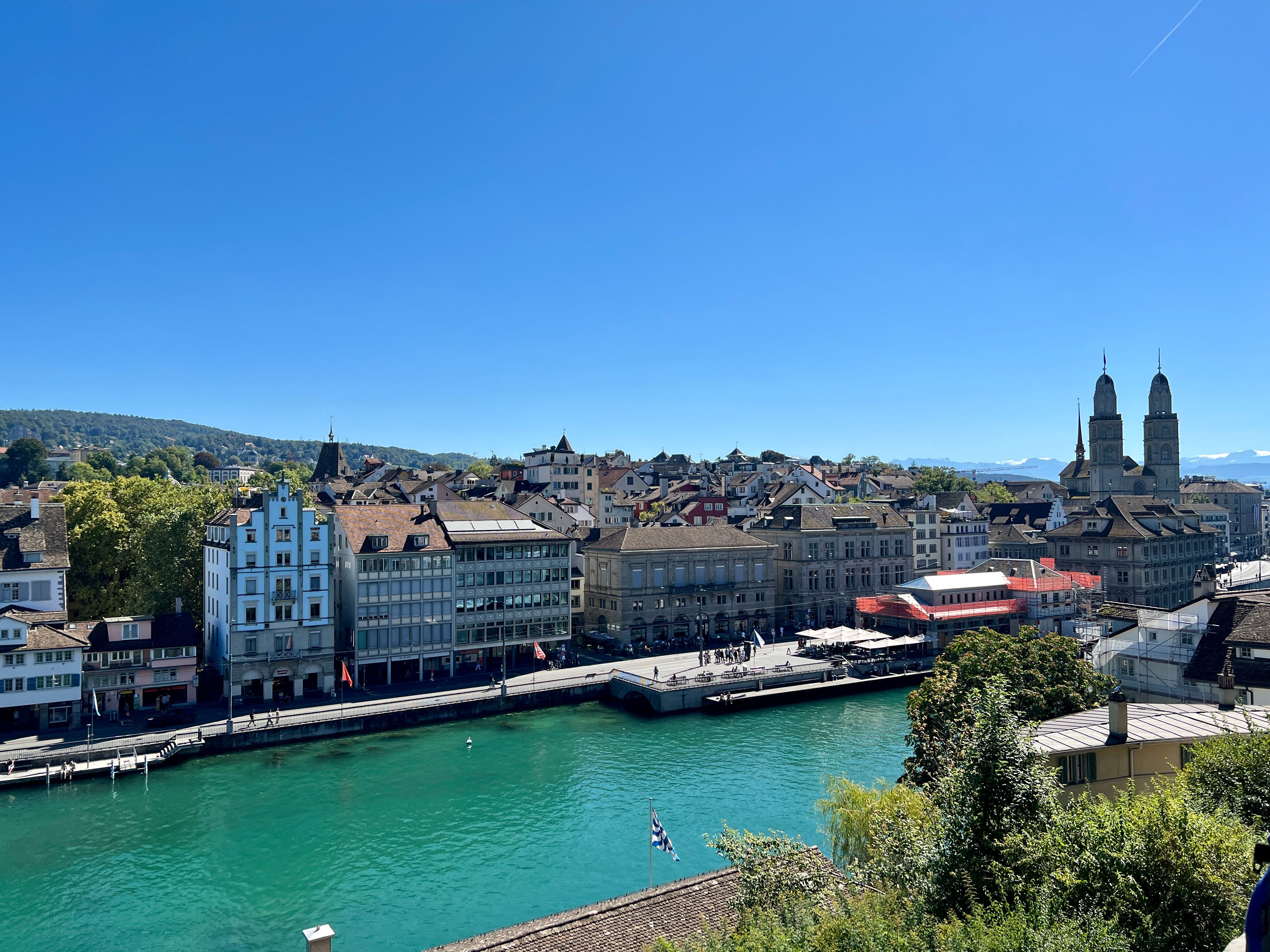
Jen: Yeah, it just wasn’t really what we expected. There were tons of bocce ball courts and lots of trees and - because all of Europe smokes - lots of people smoking.
Greg: Yeah. And between the trees and the people standing there smoking, it was difficult to kind of go up and get a view of the water. It was, like, blocked a good bit.
Jen: Yeah. So we didn’t stay there for very long and decided we wanted to take a boat back to the hotel.
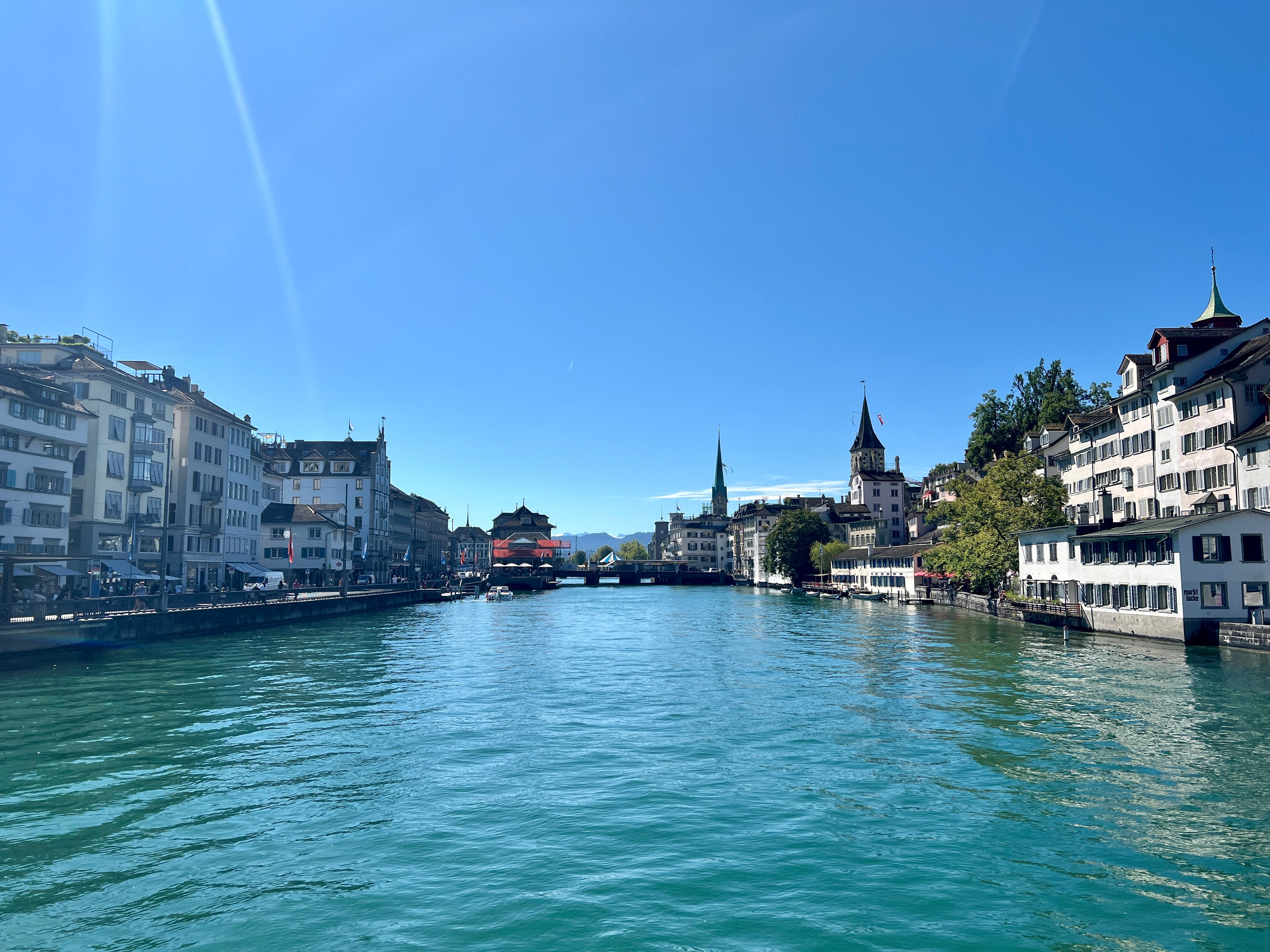
Greg: Bürkliplatz ferry dock was just a 10-minute walk away, so that’s where we headed. And got us some seats on a ferry, and we decided to sit towards the back —
Jen: Yeah.
Greg: — so that we could kind of watch the city pull away as we went down the lake.
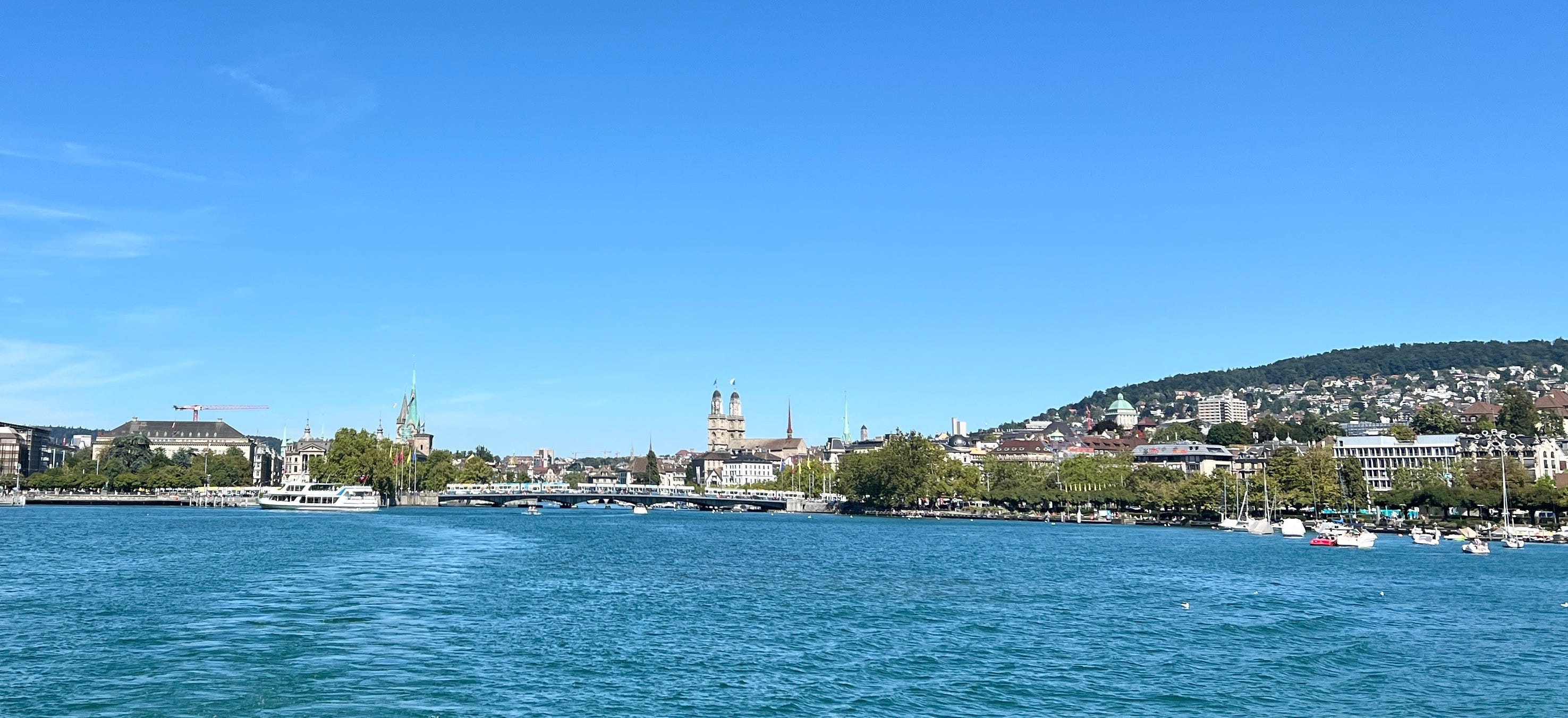
Jen: So it was really cool. We got to see a lot of stuff from the lake. One of the things we saw was the Rotes Schloss, which is literally translated to the “Red Castle”. And it’s this castle-like building, which we had to look up because we’re like, WHAT IS THAT?! Apparently now it’s just an office building.
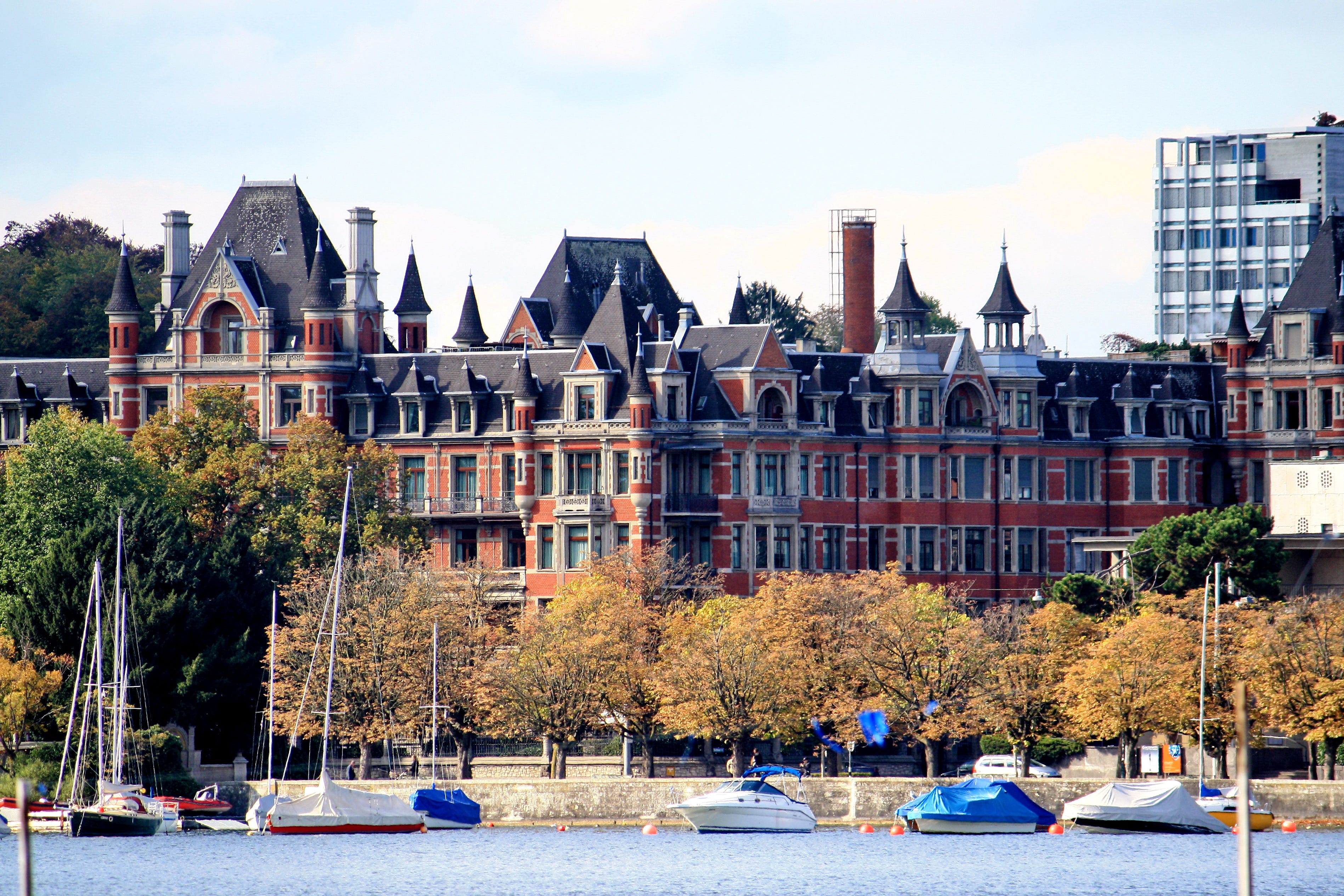
Greg: Yeah, but it is recognized as a significant cultural building in Zurich. It just happens to be an office building now.
Jen: Yeah, and there were lakeside villas and estates. Apparently it’s called the Gold Coast.
Greg: Goldküste
Jen: There you go.
Little small villages on each shore. People swimming in the lake, boating.
Greg: Yeah. And listen, Lake Zurich is beautiful and the day was beautiful. So all the scenery was gorgeous. But don’t forget, anytime you’re around Lake Zurich, you also have the backdrop of the Alps.
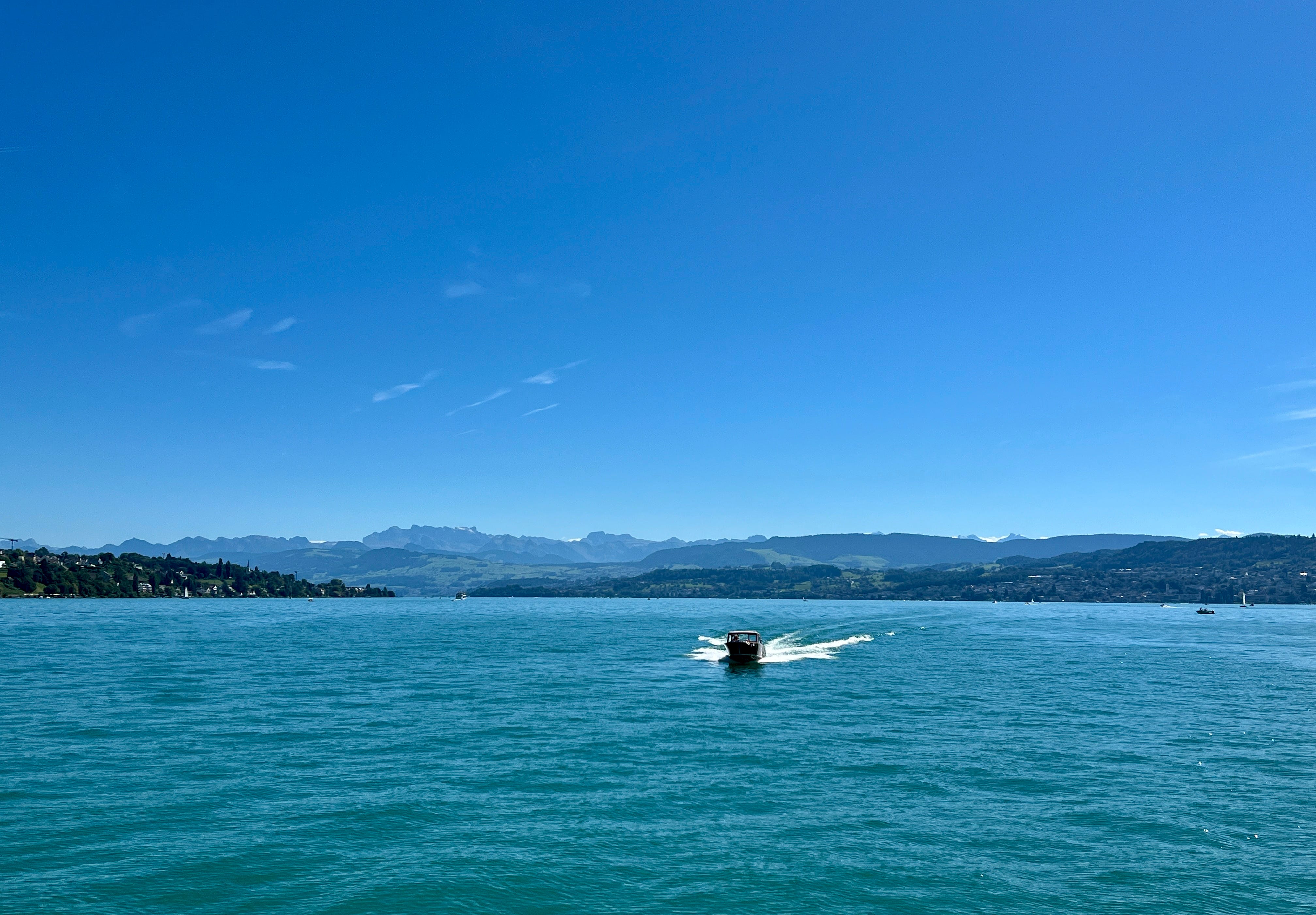
Jen: Yeah. It was just a gorgeous way to spend an afternoon.
Greg: Yeah. That ride back really kind of rounded out the day, even though there were so many things that we found out — not open on Saturdays.
Jen: (laughs)
Greg: We still felt pretty good because we got to see some cool things, but the ride back just, you can’t be sad.
Jen: No. As a little boy once said, “there’s nothin’ better than a good boat ride”.
Greg: Indeed. Shout out to Aaron.
Jen: (laughs)
Greg: Um…the last, I guess, piece to discuss would be Switzerland in general is not a cheap place to see. Everything in Zurich, but all across Switzerland, extremely high priced.
Jen: Yeah. People ask us, “if you could live anywhere in any of the places you visited, where would it be?” And we often said if money wasn’t an object, we’d probably live in Switzerland because —
Greg: Yeah.
Jen: — it’s gorgeous.
Greg: Yeah, because at least in the summertime when we were there, Switzerland was fantastically beautiful.
Jen: Yeah. But again, it’s expensive. So if you’re planning a visit there, I would definitely be prepared to spend on the high end of your budget.
Greg: Yeah. The next update, we’re going to tell you how we hired a car and driver who took us from our hotel on Lake Zurich to a little small village called Lauterbrunnen.
Jen: Yeah, and despite Greg saying it differently every time…
Greg: It’s hard to say!
Jen: (laughs) Most of our update’ll be about our time spent in Wengen, which is a little village about halfway up the mountain in the Jungfrau region of the Alps.
Greg: Yeah, we’re also going to tell you about the hotel there, which was kind of like stepping back in time in a way, in a good way.
Jen: Yeah, I think this is probably one of our favorite spots in Europe.
Greg: I agree. So, thanks for checking in!
Jen: And we’ll see you at the next stop!